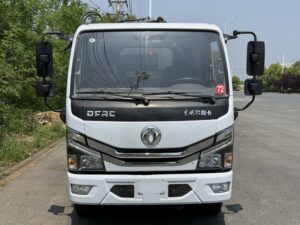
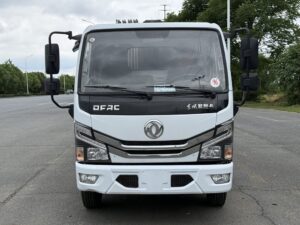
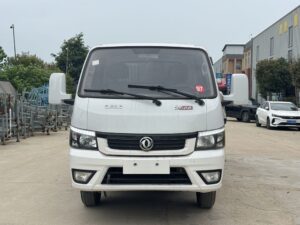
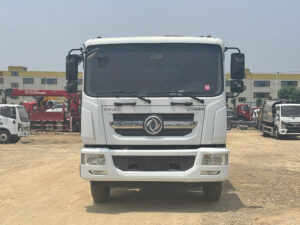
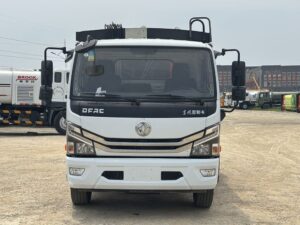
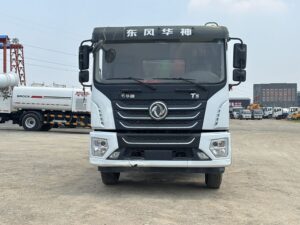
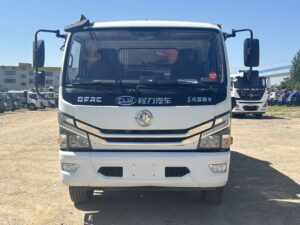
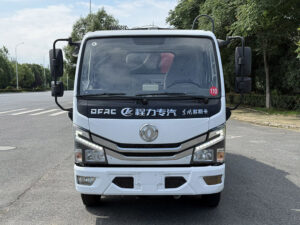
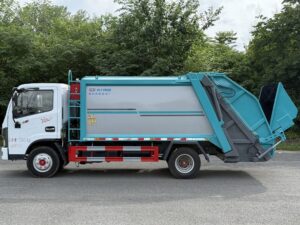
1. Financial Reality: CAPEX Optimization for Municipal Fleet Expansion
Municipal waste management contractors and private operators across the GCC, Africa, and Southeast Asia face a continuous challenge: expanding fleet capacity within strict budgetary limits. Procuring brand-new European or Japanese garbage compactors often requires an investment exceeding $180,000 per unit, accompanied by 6-to-9-month lead times. Refurbished Chinese garbage trucks—built on robust heavy-duty chassis—deliver 85-90% of original operational efficiency at approximately 30-40% of the cost of new units.
| Procurement Metrics | New European Compactor | Refurbished Chinese Compactor |
|---|---|---|
| Average Unit Cost (16m³) | $180,000 – $220,000 | $38,000 – $52,000 |
| Delivery Lead Time | 180 – 270 Days | 20 – 35 Days |
| Initial CAPEX Recovery | 36 – 48 Months | 10 – 14 Months |
| Chassis Compatibility | Complex Electronics / AdBlue required | Mechanical / Simplified Euro 3/4/5 options |
2. Chassis Selection & Tropicalization Options
Selecting the correct vehicle platform ensures operational uptime in demanding climates:
- Chassis Brands: Sinotruk Howo (336/371/380 HP), Shacman F3000/M3000, and Dongfeng Tianlong remain the industry standard due to global spare parts availability.
- Engine & Fuel System: For regions with variable fuel quality in West Africa or Central Asia, vehicles converted to inline mechanical fuel pumps (Euro 3 standard) prevent common-rail injector failure. For GCC markets (Saudi Arabia, UAE), Euro 5 systems with functioning SCR urea dosing are supplied to meet regional emissions standards.
- Extreme Heat Protection: Units configured for the Middle East feature 50°C heavy-duty tropical radiators, silicon fan clutches, and dual-stage desert air intake filtration to handle sandstorm conditions.
3. Superstructure Engineering & Hydraulic System Rigor
The compactor body endures continuous mechanical stress and chemical corrosion from municipal waste. High-spec refurbished units incorporate:
- Compaction Mechanism: Dual-direction compression sliding plates yielding a reliable compaction ratio between 3:1 and 5:1. Waste hoppers are reinforced with NM400 high-tensile wear-resistant steel.
- Hydraulics: High-pressure Permco or Parker gear pumps paired with multi-way directional control valves. Cylinders must feature double-acting seals capable of operating at continuous pressures up to 20 MPa.
- Corrosion Barrier: For coastal cities like Jeddah, Mombasa, or Jakarta, waste tanks undergo blast cleaning to Sa 2.5 standard followed by interior polyurea or high-build epoxy resin coating to resist leachate acidity.
4. Pre-Shipment Quality Control Protocol
To prevent hidden defects, fleet procurement managers should mandate third-party inspection (SGS, Bureau Veritas, or Intertek) verifying the following checklist:
- Ultrasonic non-destructive testing (NDT) on structural chassis frame rails and load-bearing axle points.
- Engine crankcase blow-by pressure test and transmission gear engagement review under load.
- Hydraulic pressure hold test at 20 MPa for 30 consecutive minutes to verify zero pressure drop or fluid weepage.
- 50 continuous continuous cycle tests of the rear tailgate lifter, scraper, and ejector panel.
5. Customs Compliance, Certification & Shipping Logistics
Used special-purpose vehicles fall under HS Code 8705.90. Ensure compliance with regional destination regulations prior to vessel loading:
- Saudi Arabia: Requires SABER platform registration and SASO Certificate of Conformity (CoC).
- Kenya / East Africa: Mandates PVOC (Pre-Export Verification of Conformity) inspection prior to departure.
- ASEAN Countries: Form E Certificate of Origin reduces import tariffs under China-ASEAN free trade agreements.
- Logistics: 16m³-22m³ compactor units are transported via RORO vessels or breakbulk below deck. Compact 8m³-12m³ units can be loaded into 40HQ High Cube or Flat Rack containers by dismounting the rear hopper assembly to optimize freight costs.